
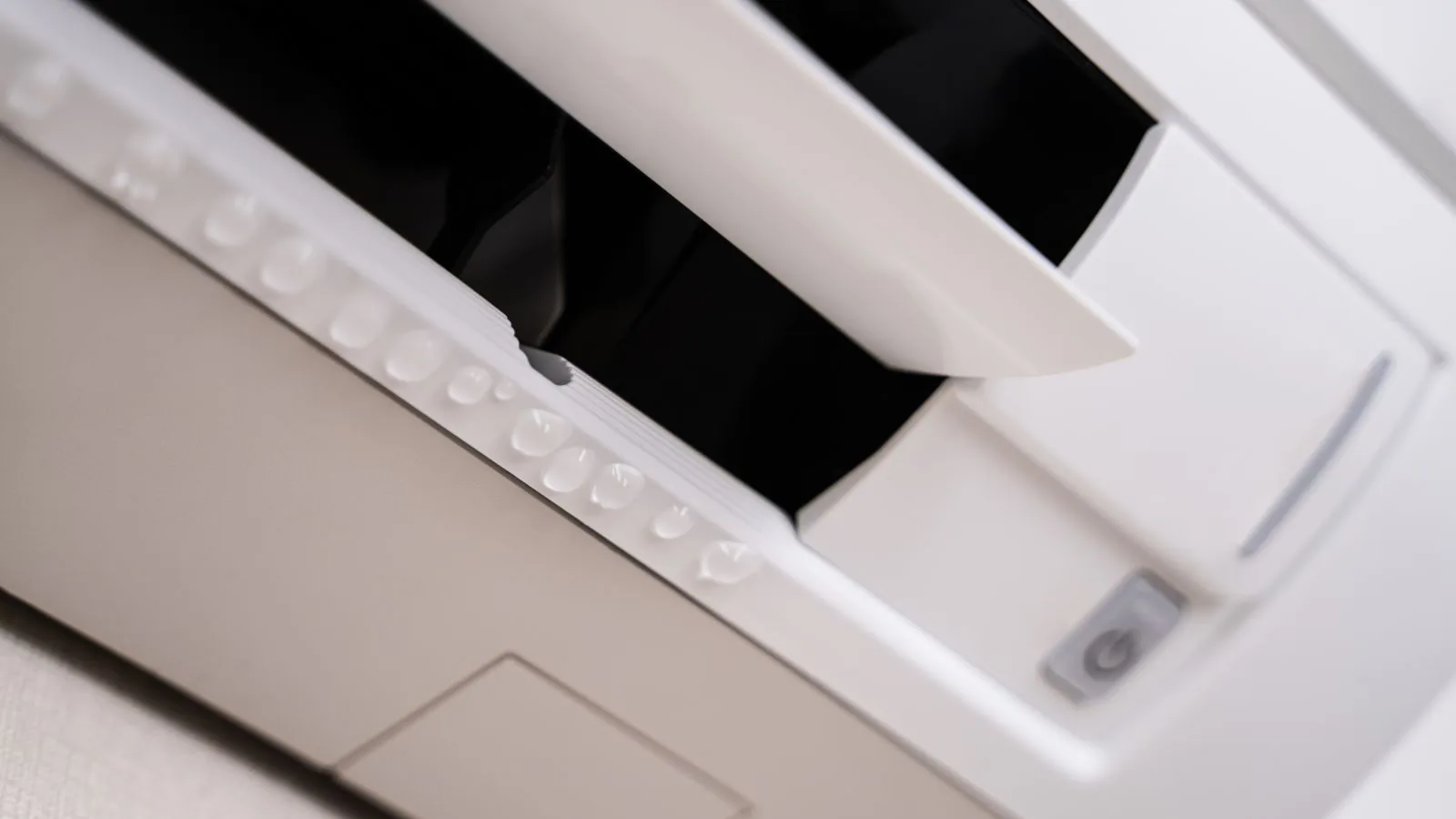
An air conditioner makes water every day it runs. Warm humid air passing over the cold coil turns to liquid, and a drain line carries that water outside or to a drain.
When the line clogs or the pan cracks, the water goes into the closet around the air handler, the ceiling below an attic unit, or the floor under a furnace. If this is happening, turn the system off at the thermostat and call for AC leak water damage repair in Deerfield, IL.
An HVAC technician repairs the unit and clears the line. We dry the building materials that the water soaked, which is the part that causes lasting problems.
Signs that your AC is leaking into the house
- A stain, bubble, or drip on a ceiling below an attic air handler.
- Water in the closet or utility room around the indoor unit.
- Damp carpet next to an interior wall where the line runs.
- A musty smell when the system starts.
- Drywall near the unit that feels soft or looks discolored.
- A float switch that keeps shutting the system down.
Water from a condensate line is usually mild at first but is not sterile. The pan and line carry biofilm and dust, and the damp environment next to a cool coil is a favorable place for mold. That is why drying fast matters more than people think.
Why AC leaks cause mold more often than other leaks
Most plumbing leaks are bigger and obvious. AC drain leaks are small, regular, and hidden. A closet with the air handler can stay damp for weeks. Drywall behind the unit takes the water up, insulation holds it, and the air from the system keeps moving spores. That combination is why we treat the drying as the main event instead of the cleanup.
If you already see growth, the mold remediation page covers containment and testing. If the stain is in a ceiling, the ceiling water damage repair page explains how wet ceilings are opened and dried.
How the dry-out works
| Where the water went | Typical approach |
|---|---|
| --- | --- |
| Closet floor and baseboards | Extract water, lift or dry flooring, dry baseboard cavity |
| Ceiling below an attic unit | Check insulation above, remove wet board that is sagging, dry the cavity |
| Drywall behind the air handler | Moisture readings decide, saturated board is cut out |
| Carpet in an adjoining room | Dry in place if recent, replace pad if it stayed wet |
Equipment is the usual: moisture meters, thermal imaging, air movers, and dehumidifiers. See structural drying for how readings are used to decide when the job is done.
Preventing the next leak
These are practical steps, not a promise. Have the condensate line flushed or cleared on a schedule that your HVAC technician recommends. Make sure a float switch or secondary drain pan is installed where the unit sits above finished space. Look at the pan and line every spring before the first hot week.
Scope, price, and insurance
Scope and price are explained before work starts. They depend on:
- How long the leak went on. A slow seep for weeks is more damage than a one-time overflow.
- What is below or beside the unit. A unit in an attic over a bedroom has more at stake than one in a garage.
- Insulation and drywall. Wet insulation and board usually come out.
- Whether mold is present. That adds containment and testing.
- Drying days. Enclosed closets are slow to dry.
Insurance treats sudden overflow differently from long-term seepage, and HVAC maintenance issues sometimes affect coverage. Ask your insurer, and keep the HVAC technician's service report together with your photos.
Safety and standards
Turn off the air handler at its switch or breaker before touching a wet unit. Keep away from wet outlets, and do not remove panels yourself. Drying in this work follows the principles of ANSI/IICRC S500, the published standard for professional water damage restoration.
Air handler leaking into the home? Call and we will talk through drying and what to dry first.
☎ (833) 521-1033We work in Deerfield and nearby towns such as Lake Forest and Lincolnshire.
A leak that is dripping into a ceiling or flooding a closet is urgent, and our line is open 24/7. A slow stain is less urgent, but drying should not wait because of mold.
No. An HVAC technician repairs the unit and the drain line. We dry the materials that got wet.
For a tiny damp patch, maybe. If the wall, ceiling, or closet floor is wet, hidden moisture is likely, and a moisture reading tells you whether drying is complete.
Frequently asked questions
Is AC leak water damage an emergency?
Do you fix the air conditioner?
Can I just run a fan on the wet spot?
How soon should I call?
As soon as you see the water. Mold can start on wet drywall and wood within a couple of days.
AC leak damage in Deerfield? Call (833) 521-1033, the line is open 24/7.
☎ (833) 521-1033