
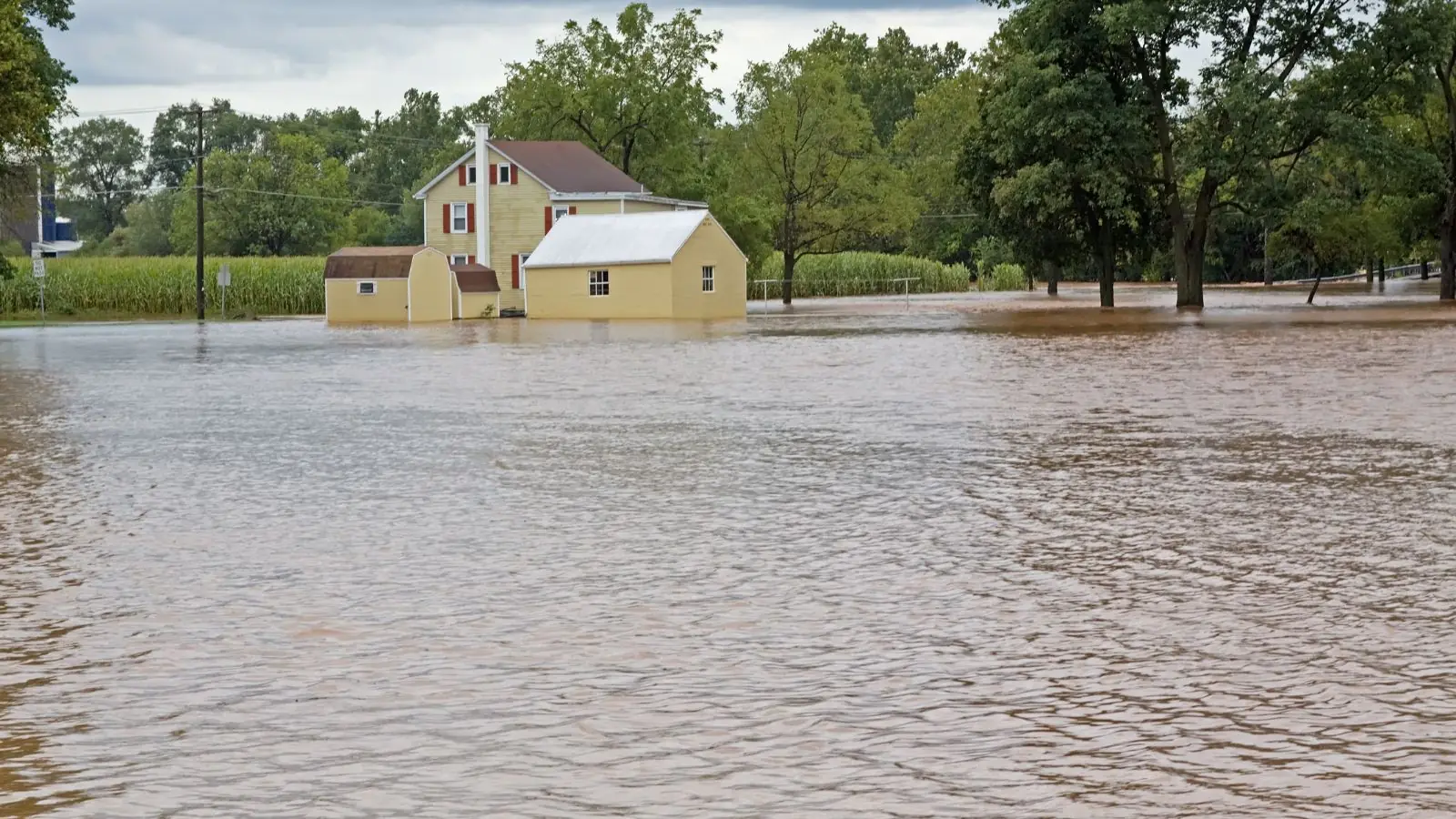
Storm water coming into a building is an emergency. Stay away from water near electrical items, move belongings off wet floors, and call our 24/7 line in Deerfield, IL. If conditions outside are unsafe, wait until it is safe to go out.
Storm water damage in Deerfield, IL is about the water a storm lets into your building, whether through a punctured roof, a broken window, wind-driven rain behind siding, or a failed seal.
When this happens, stay away from downed lines, keep people out of rooms with wet wiring, and call us on our 24/7 line. Storms do not follow business hours, and a hole in a building gets worse with each hour of rain.
This page is the interior cleanup after the storm. A roofer, window company, or tree service handles repairs and removals. We handle the water, the wet materials, and drying. A plain roof leak with no storm event is covered under ceiling water damage repair, and rising or flowing outdoor water is covered under flood damage cleanup.
When storm water is an emergency
- Rain is still coming in through a damaged roof, window, or wall.
- A tree or limb has hit the house.
- Water is in the attic and soaking insulation and ceilings.
- A power line is down on or near the house. Stay away, call the electric utility and 911, and do not touch anything wet.
- You smell gas. Leave and call the gas utility and 911.
Where storm water gets in
| Entry point | How it happens | What gets wet |
|---|---|---|
| --- | --- | --- |
| Roof opening | Wind lifts shingles or a limb punctures decking | Attic insulation, ceilings, upper rooms |
| Windows and doors | Wind-driven rain past damaged seals or glass | Window walls, sills, flooring |
| Siding and flashing | Rain pushed behind damaged siding | Wall cavities, interior drywall |
| Chimney and vents | Failed flashing or caps | Ceiling below, attic framing |
| Garage and basement | Runoff pushed against a door or window well | Lower floors, stored items |
What to do while the storm is still going
- Get to a safe placeStay clear of windows and any area where the ceiling has opened.
- Control what you safely canMove furniture away from leaks and place buckets. Do not climb on a wet roof.
- Document the damagePhotograph the hole, the water, and the damage once it is safe, since insurers want to see what the storm did.
- Call us and a rooferThe roofer tarps or repairs the opening, and we start on the interior water.
- Avoid contaminated waterIf storm runoff came in at ground level, treat it as unclean and keep people and pets away.
Local weather records and why they matter
The National Weather Service Chicago office and NOAA's Storm Events Database keep local storm reports. If you are filing an insurance claim after a storm, a date and a type of event backed by an official record is useful, and it is better than relying on memory.
The Village of Deerfield also posts storm and flooding notices, as it did during the April 2013 flooding along the Chicago River branches, when it advised residents about road conditions and cleanup.
How storm cleanup proceeds
Crews start by identifying every spot where water came in, because storm water usually enters in more than one place. Then they remove standing water, take out wet insulation and saturated drywall, and set up drying equipment as outlined under structural drying. If the water came in at ground level, flood water rules apply, and soaked carpet and pad are usually removed.
Wet insulation in an attic deserves special mention. It holds water against the ceiling below long after the storm ends, and if it is not removed, the ceiling can keep failing for days.
Scope, price, and insurance
Scope and price are explained before work starts. They depend on:
- Number of entry points. Each opening usually has its own wet area.
- Duration of exposure. Water that came in for hours is a bigger job than a brief gust-driven leak.
- Contamination. Ground-level storm water is treated as unclean.
- Materials. Insulation, drywall, flooring, and contents all have different outcomes.
- Temporary protection. Tarping and board-up are done by other trades and affect how fast drying can start.
Standard homeowners policies often cover wind and hail damage while flood damage usually needs separate coverage, and the Illinois Department of Insurance publishes guidance on both. Ask your insurer what your policy covers, take photos before cleanup, and keep records of any temporary repairs.
Storm left water in the house? Call now and we will start on the interior water.
☎ (833) 521-1033Service area
We serve Deerfield and nearby towns, including Lake Forest, Highwood, and Lincolnshire.
Yes. The line is open 24/7. Storms often hit overnight, and water inside the house cannot wait for morning.
No. A roofer or window company does the exterior work. We remove the interior water and dry the building.
Stay out of any room with a compromised ceiling and call a tree service or roofer for the exterior. Call us for the interior water. If power lines are involved, call the utility and 911 first.
Frequently asked questions
Do you handle storm damage emergencies at night or on weekends in Deerfield?
Do you repair the roof or windows?
What if a tree hit my house?
Is storm damage the same as flood damage?
Not usually. Storm damage is rain and wind getting through the building. Flood damage is outdoor water rising or flowing into it. Insurance treats them differently.
Storm water in Deerfield? Call (833) 521-1033, answered 24/7.
☎ (833) 521-1033