
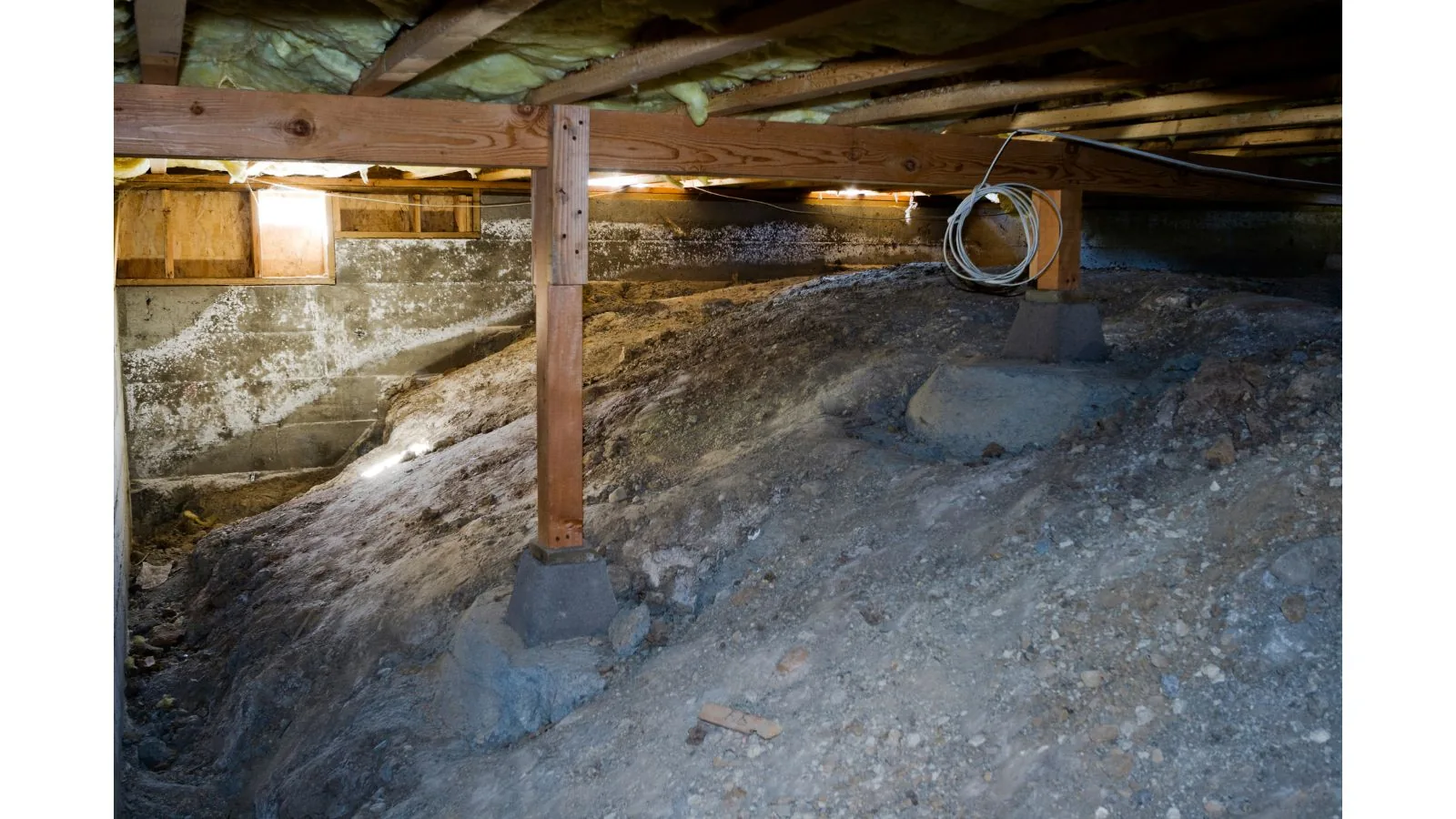
A crawl space is out of sight, which is why water down there can go on for a long time. Standing water, damp insulation hanging from the joists, a floor that feels cold and soft, or a musty smell inside the house can all point to a wet crawl space.
If you have water under your home, call for crawl space water damage cleanup in Deerfield, IL. Our phone line is open 24/7, and the sooner the space is dry, the less moisture reaches the floor above.
Does your home have a crawl space
Not every house does. Many have full basements, some have slabs, and others are built over a crawl space, or have one under an addition or an older section.
If you are not sure, look for an access hatch in a closet floor, in a hallway, or on an outside wall, or a vent along the foundation. We do not claim that crawl space problems are common in Deerfield, since we have no local figure. We do know that a wet one deserves prompt attention.
What a wet crawl space can do
- Wet insulation falls away from the subfloor and stops insulating, which makes floors cold.
- Joists and subfloor take up moisture and can soften or grow mold.
- A damaged or missing vapor barrier lets ground moisture rise into the house.
- Moist air in the crawl space moves up into living areas as odor.
- Ducts or pipes in the space can sweat or leak, adding to the water.
Where the water comes from
| Source | Typical sign | What the cleanup focuses on | |
|---|---|---|---|
| --- | --- | --- | |
| Groundwater after heavy rain | Standing water, wet soil | Pumping, drying, checking the vapor barrier | |
| Plumbing leak above or in the space | Dripping, wet joist near a pipe | Water removal, insulation, subfloor drying | |
| Irrigation or downspout runoff | Water along one foundation wall | Water removal, drying wall and soil edge | |
| HVAC condensation | Wet duct insulation, drips | Dry duct area, check [[ac-leak-water-damage | AC leak sources]] |
| Humidity only | Beads of moisture, musty smell | Dehumidification and moisture readings |
How crawl space water is handled
Crews enter with protective gear and check for electrical hazards, standing water depth, and the condition of the vapor barrier and insulation. Bulk water is pumped out. Wet insulation is removed because it holds moisture against the subfloor. Then air movers and dehumidifiers dry the space, and moisture readings on joists and subfloor show when it is done. The general process is explained on the structural drying page.
If the water arrived through a leak in the floor above, the hardwood floor water damage page or the kitchen water damage page covers what happened to the finished surfaces.
Mold in crawl spaces
Mold needs moisture and an organic surface, and a damp crawl space has both. Testing and remediation follow the ANSI/IICRC S520 standard, and our mold remediation page explains the steps.
We will not promise that mold will not return, but removing the moisture source and drying the space properly is the first line of defense. Illinois has a Mold Remediation Registration Act administered by the Illinois Department of Public Health, so ask any company what registration or certification applies to its work.
Limits we state plainly
Cleaning up and drying a crawl space is not the same as encapsulating it. Encapsulation, new vapor barriers, grading, and drainage are building work for another contractor. If groundwater keeps entering, drying will not solve it alone, and we will say so.
Scope, price, and insurance
Scope and price are explained before work starts:
- Water depth and source. A plumbing leak is a smaller job than groundwater across the whole space.
- Access. Tight openings slow work and add labor.
- Insulation and vapor barrier. Removal and disposal count toward scope.
- Mold. Growth adds containment and testing.
- Drying time. Damp soil and poor airflow extend drying.
Insurance varies by source. Plumbing leaks are often covered, groundwater often is not, and policies differ. Ask your insurer and document the space with photos.
Safety and standards
Do not enter a crawl space with standing water or exposed wiring. Wear a respirator and gloves if you must look, and let a crew handle removal.
Water under the house? Call now and we will help you decide what to check first.
☎ (833) 521-1033Service area
We serve Deerfield and nearby towns, including Lincolnshire and Highwood.
Active water from a leak is urgent, and our line is open 24/7. Standing water after rain is also worth a prompt call because the space dries slowly.
No. That is a building trade. We clean up water and dry the space.
Look for standing water, damp or fallen insulation, musty smells in the house, and a cold floor. If you cannot or should not enter, a restoration crew can check.
Frequently asked questions
Is crawl space water an emergency?
Can you encapsulate my crawl space?
How do I know if my crawl space is wet?
Can a sprinkler or irrigation backflow cause crawl space flooding?
Yes. A failed irrigation line or backflow can put a lot of water near the foundation, and some of it can enter the space.
Crawl space water in Deerfield? Call (833) 521-1033, the line is open 24/7.
☎ (833) 521-1033