
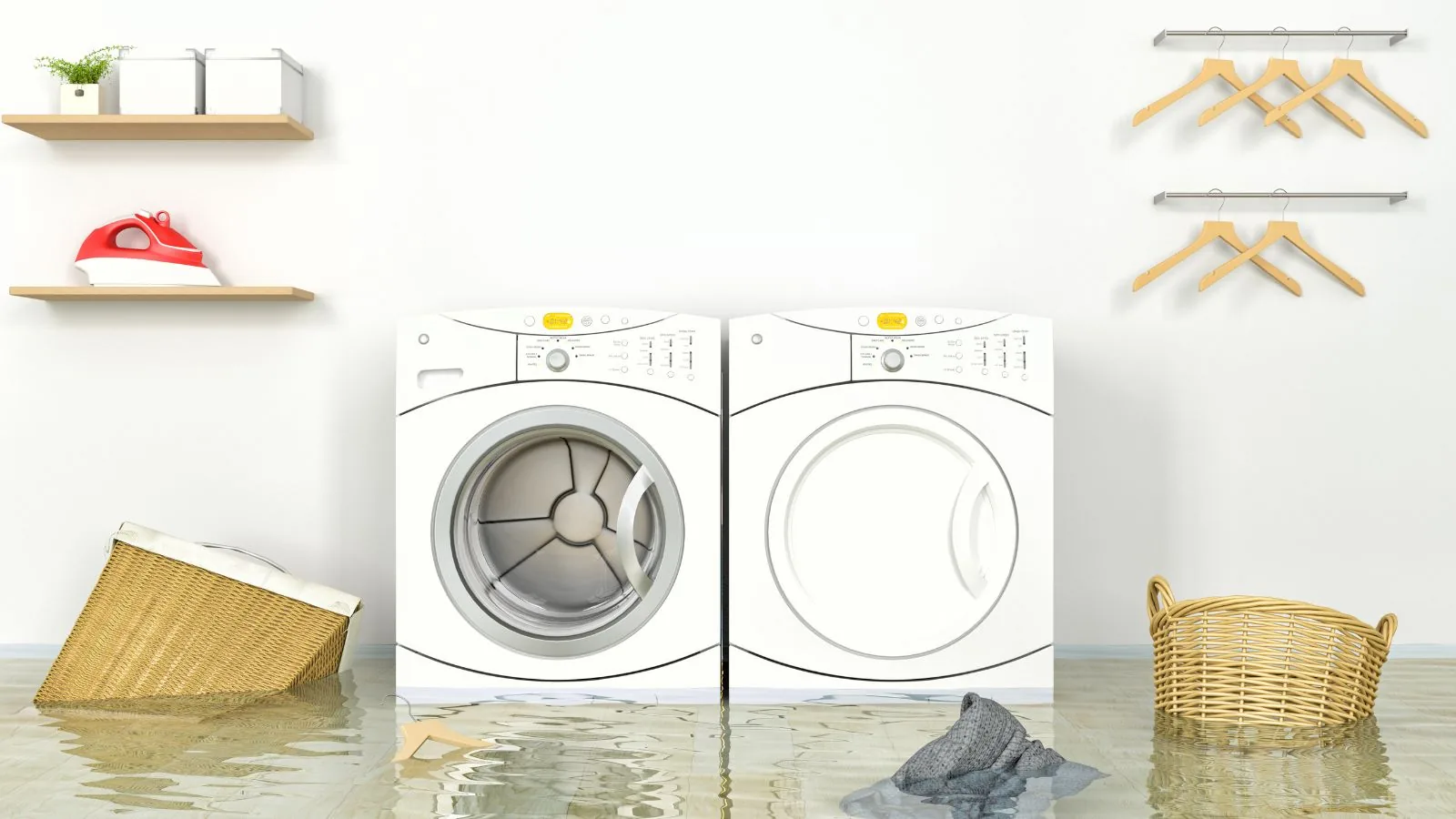
An appliance leak that is spreading across a floor is an emergency. Turn off the appliance's supply valve or the main, unplug it only if the cord and outlet are dry, and call our 24/7 line in Deerfield, IL.
Appliances leak quietly, and that is what makes them expensive. A washer supply hose can let go while the house is empty, a dishwasher can seep under the cabinet kick plate for months, and a refrigerator ice-maker line can drip behind the unit with no sign until the floor swells.
If an appliance is leaking now, shut its water valve and call the 24/7 line for appliance leak water damage in Deerfield, IL.
We do not repair appliances. Your appliance service company or plumber does that. We take care of the water and the damage the leak caused to floors, cabinets, and walls.
Which appliance, which line
Each appliance fails in its own way, which changes where the water goes.
| Appliance | Common failure | Where the water goes | Water type |
|---|---|---|---|
| --- | --- | --- | --- |
| Washing machine | Burst supply hose, failed inlet valve, drain hose pulled loose | Across the laundry floor, down through the subfloor below | Clean supply water or gray drain water |
| Dishwasher | Worn door seal, loose drain line, failed inlet | Under cabinets and into the subfloor | Gray water |
| Refrigerator ice maker | Cracked or loose supply line | Behind and under the unit, into flooring | Clean |
| Water softener | Brine line or drain failure | Basement floor | Gray |
| Toilet | Supply line, wax ring, tank seam | Bathroom floor and the ceiling below | Clean or gray |
What to do in the first minutes
Turn the appliance off and shut the valve that feeds it, which is usually on the wall behind or beside it. Unplug it only if the cord and outlet are dry and you do not have to stand in water to reach them.
Put towels on the floor to stop spread and lift anything absorbent. If the leak comes from a toilet, treat the water cautiously until you know whether it is clean or from a drain.
Then call. Water that goes under cabinets or a washer pan rarely stays where you can see it.
Why appliance leaks cause hidden damage
The surfaces under and behind appliances are often hard to check: vinyl over plywood in a laundry room, a kick plate under a dishwasher, a drop-in tub surround. Water settles where air cannot get to it, and that is how a leak creates mold or soft subfloor without any obvious puddle.
Moisture meters and thermal imaging tell the crew where the water actually went. Often that is farther than the stain, including under the next room's flooring and into the ceiling below if the appliance is upstairs. When the leak is from a washing machine on an upper floor, the page on ceiling water damage repair covers what happens below.
Cleanup and drying steps
- Extract the waterWet vacuums and extraction units remove standing water, covered on the water extraction page.
- Open what must openToe kicks, flooring edges, and sometimes a section of cabinet or drywall are removed to reach trapped water.
- Dry and dehumidifyAir movers and a dehumidifier run until readings return to normal.
- Check for contaminationGray water from a dishwasher or washer drain is treated before surfaces are closed back up.
- Hand off to repairFlooring and cabinet repairs follow once the structure is dry.
Scope, price, and insurance
Scope and price are explained before work starts, and they depend on:
- How long the leak ran. A hose that burst once is different from a seep that ran for months.
- Flooring and subfloor. Vinyl and plywood subfloor in a laundry room are common and often need partial replacement.
- Cabinets and walls. A leaking dishwasher can wet adjoining cabinets, and that may extend to the kitchen water damage scope.
- Floors below. An upstairs appliance can add a ceiling and a lower room to the job.
- Drying time. Closed-in spaces take more days to dry.
Insurance often treats a sudden appliance failure differently from a slow leak that went unnoticed. Check your policy language and keep photos of the appliance, the valve, and the wet area. Appliance warranty or service company reports can also support a claim.
Safety and standards
Unplug an appliance only if the cord and outlet are dry. Otherwise switch off its breaker. Our process follows the principles of ANSI/IICRC S500, the published standard for professional water damage restoration, which is also what insurers often expect to see logged.
Appliance still leaking? Shut the valve and call to get the water out fast.
☎ (833) 521-1033Service area note
We serve Deerfield and nearby towns, including Highwood and Lincolnshire. If you are in a town not listed, ask on the call.
Yes. The line is open 24/7. Water from a washer or dishwasher can spread a long way before morning, so call whenever you find it.
It can if the water stays in the cabinet or subfloor. Fast drying matters. If you already see or smell growth, our mold remediation page explains the process.
No. Have it checked first, since continued use can add more water to a damaged area.
Frequently asked questions
Do you handle appliance leak emergencies at night or on weekends in Deerfield?
Can a dishwasher leak cause mold?
Should I keep using the appliance after a leak?
Does my washer hose cause most laundry room floods?
We have no local figure for that. Rubber supply hoses do wear out over time, so looking at hoses and replacing old ones before they fail is practical advice.
Appliance leak in Deerfield? Call (833) 521-1033, answered 24/7.
☎ (833) 521-1033