
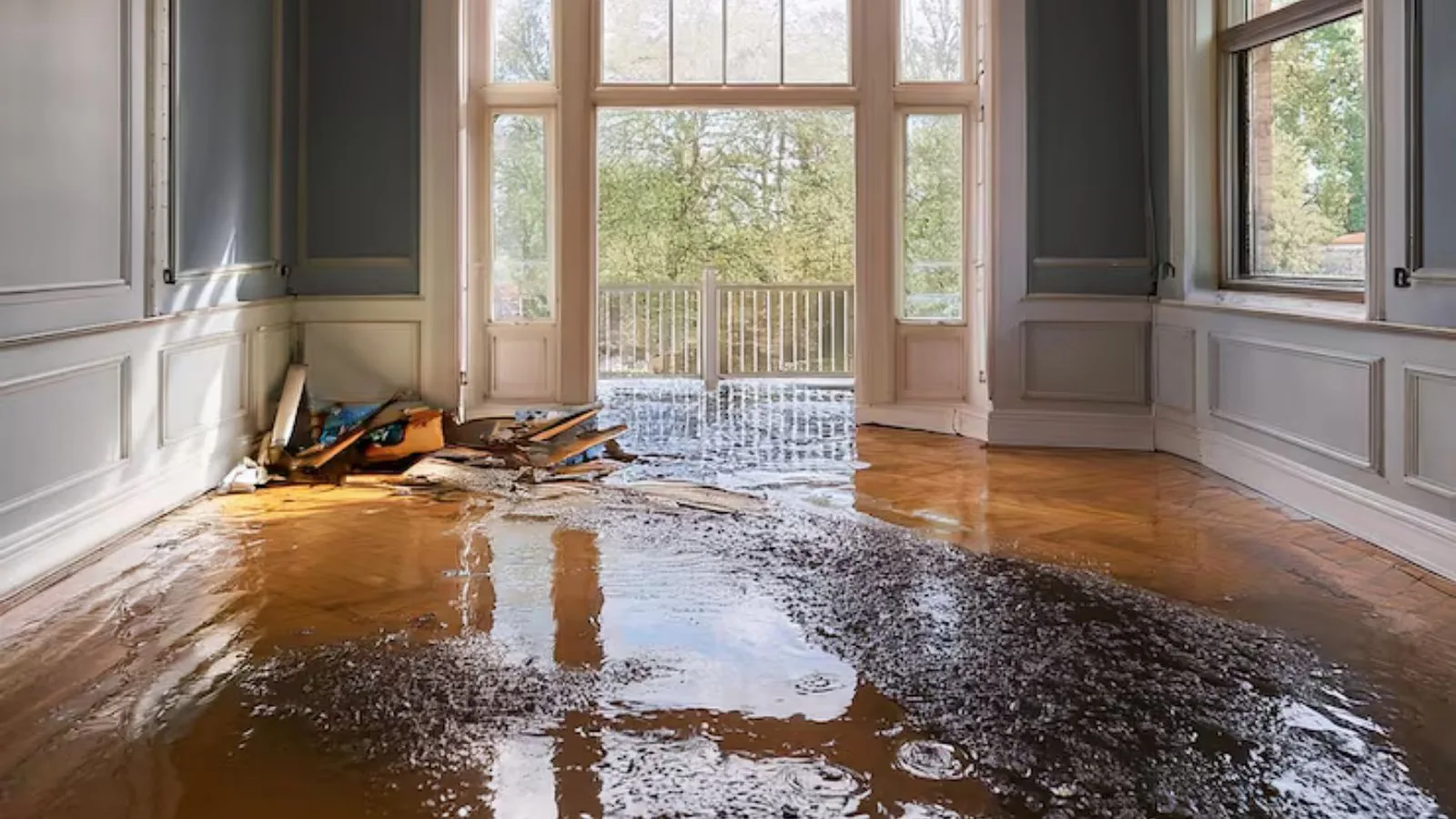
A wet wall is rarely only a wall problem. The water came from somewhere, a pipe, an appliance, a window, or a roof, and it traveled along the inside of the wall before it showed itself.
If you have a stain, a bubble, a soft spot, or a spreading discoloration on a wall in Deerfield, IL, call for wall and drywall water damage repair on our 24/7 line, and shut off any water you suspect is feeding it.
Signs that a wall is wet inside
- Paint bubbling or peeling, or wallpaper seams lifting.
- A brown, yellow, or gray stain that grows.
- A soft spot, or a spot that dents when pressed.
- Baseboards that swell or pull from the wall.
- A musty smell near one wall.
- Water at the base of the wall after rain.
A hole forming in drywall is a late sign. By then the paper face has failed and the gypsum has turned to mush.
How drywall reacts to water
Drywall absorbs water by wicking, which means it pulls moisture up from a wet floor or down from a leak. A few inches of water on the floor can leave a wall wet two feet up. Insulation in the cavity holds water against the back of the board. Standard drywall loses strength quickly when saturated, and paper-faced board is a food source for mold.
Dry it or cut it out
| Condition | Typical decision | |
|---|---|---|
| --- | --- | |
| Lightly damp, clean water, caught within a day or two | Dry in place with equipment, confirm with meter readings | |
| Saturated, sagging, or soft | Cut out and replace | |
| Wet insulation inside | Open the wall to remove and dry the cavity | |
| Contaminated water | Remove affected board and insulation | |
| Visible mold | Remove and treat, see [[mold-remediation | mold remediation]] |
Crews cut drywall along a straight line a few inches above the wet mark so the repair patch is clean. They remove baseboards to open the bottom of the wall, and drill small holes to release trapped water or run air into a cavity when that is enough.
Where the leak came from
The wall itself is the symptom. A burst pipe or an appliance leak behind it, a failed window or siding, a roof leak running down, or a shower surround that is leaking can each be the source.
One scenario people mention is a leak at siding that runs into a kitchen wall, and another is a garage wall wet from a washer or roof leak. Those need the outside problem fixed as well.
What the process looks like
- Find and stop the waterPlumbers, roofers, or window companies fix the source. We handle the water that got in.
- Map the wetnessMeters and thermal imaging show how far the water went.
- Open the wall as neededRemoving baseboards and cutting a section out gives access.
- Dry the cavityAir movers and a dehumidifier run until readings return to normal. See structural drying.
- Hand off to repairDrywall, taping, paint, and trim finish the job.
Permits and rebuild
Rebuilding a wall after water damage is general construction. The Village of Deerfield publishes building permit applications on its website, and its offices can tell you whether a repair at your address needs a permit. A permit question is for the village, not for us.
Scope, price, and insurance
Scope and price are explained before work starts:
- Wall area wet. A single section and a full wall are different.
- Insulation. Wet insulation behind drywall is usually removed.
- Source and water type. Clean water allows more drying in place.
- Finishes. Paint, texture, wallpaper, and trim affect rebuilding but not drying.
- Drying time. Closed cavities need equipment longer.
Insurance often covers sudden leaks and not long-term seepage. Photograph the wall, keep the plumber's or roofer's invoice, and ask your insurer about the source.
Safety and standards
Turn off power to a wet wall at the breaker before cutting into it, since wiring may be inside. Wear a mask when cutting drywall. Drying follows the principles of ANSI/IICRC S500.
Wall wet or soft? Call now so the cavity is dried before mold starts.
☎ (833) 521-1033Service area
We serve Deerfield and nearby towns, including Lincolnshire, Highwood, and Lake Forest.
Painting hides the stain but not the moisture. If the wall is still wet, the stain returns and mold can grow behind the paint.
A moisture meter tells you. Touch is not reliable.
Not always. Lightly damp clean-water drywall can dry in place. Saturated or soft board is replaced.
Frequently asked questions
Can I paint over a water stain?
How do I know if the wall is still wet?
Do I need to replace the drywall?
What about baseboards?
Baseboards often come off so the bottom of the wall can dry, and they may be reinstalled or replaced.
Wet wall in Deerfield? Call (833) 521-1033, the line is open 24/7.
☎ (833) 521-1033