
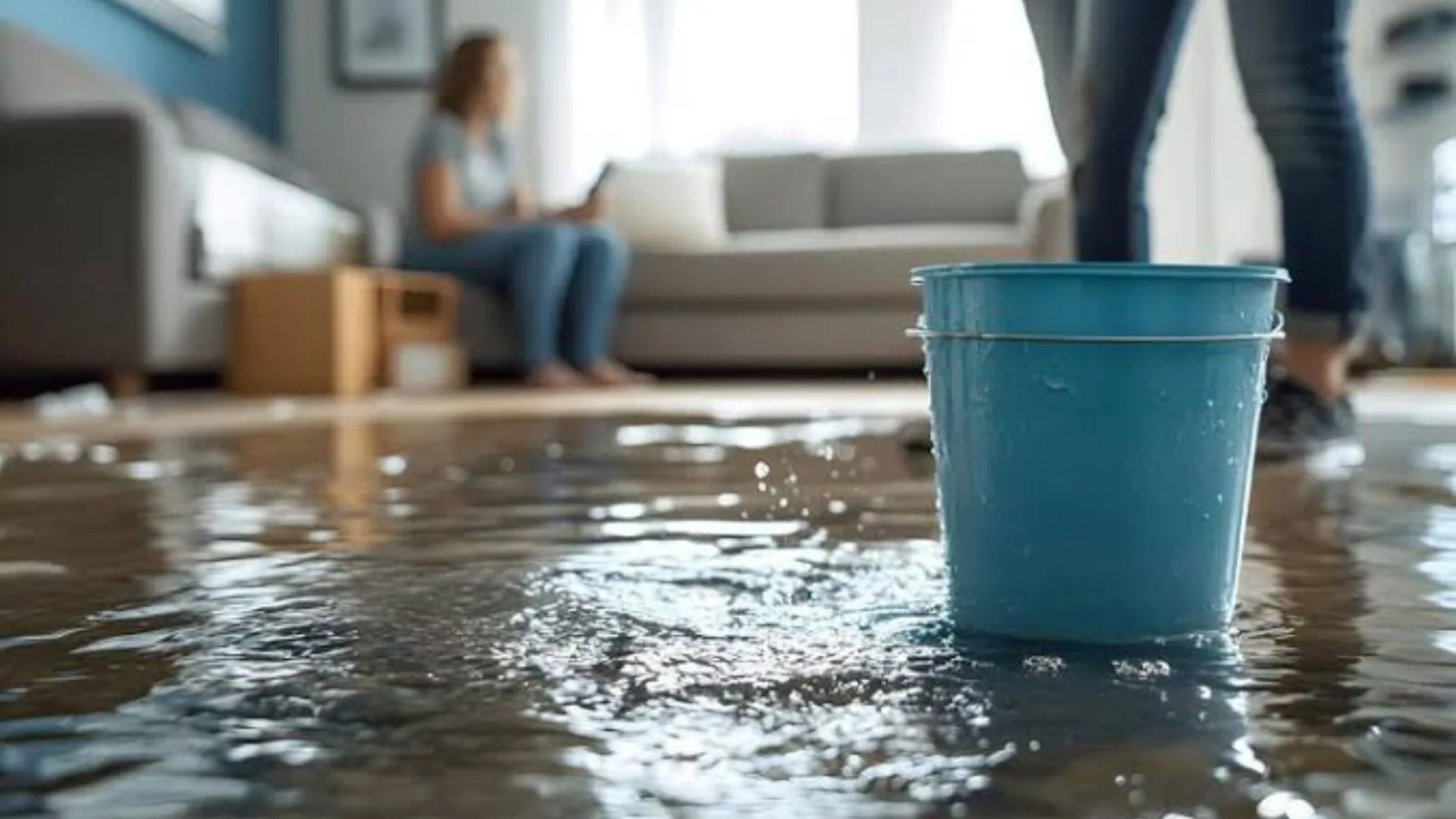
If water is standing on your floor right now, treat it as an emergency and call the line at the top of this page. Our dispatch line is open 24/7, so a flooded laundry room at 2 a.m. gets the same answer as one at noon.
While you wait, stop the source if you can reach the shut-off safely, keep everyone out of the water, and move anything valuable up off the floor.
Water extraction is the first physical step of water damage restoration in Deerfield, IL. It means pulling bulk water out of the structure with pumps and extraction units before drying equipment goes in. The sooner standing water is gone, the less of it soaks upward into drywall, wicks into baseboards, and sinks into subfloor seams.
When standing water is an emergency
Not every wet floor is the same problem. A cup of water under a sink is a mop job. Water that covers a floor, runs under a wall, or keeps arriving is an emergency, because the damage moves faster than most people expect. Drywall can pull moisture several inches above the waterline, and carpet pad holds water like a sponge.
Call right away if any of these are true:
- The water covers most of a room, or it is deeper than the baseboards.
- Water is still arriving from a pipe, appliance, sump pit, or drain.
- The water came from a toilet, a floor drain, or outside the building, which makes it contaminated.
- Water is near outlets, a panel, a furnace, or a water heater.
- Anyone in the home has asthma, is pregnant, or is elderly, since wet materials affect indoor air quickly.
What to do while you wait for the crew
- Stop the sourceClose the fixture shut-off or the main water valve. If you cannot reach it without stepping through water, leave it and call us from a dry spot.
- Think about electricity firstNever wade into water that touches outlets, cords, or a panel. If the panel is dry and reachable, you can switch off power to the wet area. If not, call your electric utility or 911 before you call us.
- Lift what you canMove rugs, books, electronics, and small furniture onto counters or stairs. Put foil or plastic under furniture legs that must stay in the water.
- Keep people and pets outWater that came from a drain, toilet, or the outdoors can carry bacteria. Boots and gloves are the minimum if you must walk through it.
- Photograph before moving moreA few wide photos and a close-up of the waterline help later with an insurance claim. Take them once it is safe.
How water extraction works
Crews start by finding the waterline and checking the source. Then they choose the equipment that fits the water. Shallow water on hard floors is pulled with wet vacuums and squeegee wands. Deeper water goes first to submersible pumps with hoses run to a drain or outside. Carpeted rooms use truck-mounted or portable extraction units that lift water out of the carpet and pad at the same time.
After the bulk water is out, the crew takes moisture readings with a meter on baseboards, drywall, flooring, and framing. Those readings decide what stays, what is cut out, and where air movers and dehumidifiers go. That handoff is covered on the structural drying page, and it matters because extraction alone leaves a lot of moisture behind.
Which water are we dealing with
How the water got in determines how it is handled, so the crew sorts it by category before touching anything.
| Water category | Typical source | What changes in the work | |
|---|---|---|---|
| --- | --- | --- | |
| Category 1 | Supply line, faucet, tub overflow with no contaminants | Extraction and drying, many materials can be saved | |
| Category 2 | Dishwasher or washer discharge, sump pit overflow | Extraction, cleaning with antimicrobial products, more materials removed | |
| Category 3 | Sewage, rising outdoor water, long-standing wet materials | Protective gear, removal of porous materials, disinfection, see [[sewage-backup-cleanup | sewage backup cleanup]] |
Clean water does not stay clean. Category 1 water that sits for a day or two on carpet and pad can degrade, which is why waiting until morning costs more than it looks like it will.
Water in Deerfield basements and ground floors
In April 2013, the Village of Deerfield reported flooding along the West and Middle Forks of the North Branch of the Chicago River, with standing water on some roads until it receded. Residents with soaked carpet were told to cut it into bundles for curbside pickup.
The practical lesson for a homeowner is simple: when flood water or heavy rain pushes into a lower level, that water is outdoor water, and carpet and pad that sat in it are usually removed instead of dried.
Most extraction calls here are smaller than a river event. A failed sump pump in a finished basement, a washing machine hose that let go while nobody was home, or a water heater that split its seam can all put an inch or two of water across a floor.
An inch across a 600 square foot basement is more than 300 gallons, which is why a mop and a few towels never keep up.
What affects the scope and price
Scope and price are explained before work starts, and they depend on a handful of real factors:
- Water category. Clean, gray, and contaminated water are priced and handled differently because the protection and disposal steps differ.
- Depth and square footage. More area and more depth means more equipment, more hose, and more hours on site.
- Materials involved. Carpet and pad, hardwood, laminate, drywall, and insulation each respond differently to a soaking.
- Access and layout. A finished basement with a narrow stair takes longer than an open garage floor.
- What comes after. Extraction is often followed by drying and some demolition, and the scope should say so up front.
Sudden and accidental water damage is often covered by a homeowners policy, while gradual leaks and neglect often are not. Flood damage from outside water usually needs separate flood coverage, so ask your insurer how your own policy treats the source of this water. Photos, moisture readings, and an itemized scope all help document a loss.
Safety and standards
Water categories, protective gear, and drying targets on this page follow the principles of ANSI/IICRC S500, the published standard for professional water damage restoration. If you smell gas or see sparks, leave and call 911.
Need water pumped out of a Deerfield home or business? Call now and describe what you see.
☎ (833) 521-1033Related problems that start with standing water
If the water came from a split supply line, the burst pipe page covers shut-off and cleanup steps. If it entered after a heavy rain, the basement water damage page explains what happens to finished basements, and flood damage cleanup covers outdoor water in more depth. We dispatch across Deerfield and to nearby towns including Highwood, Lincolnshire, and Lake Forest.
One limit worth stating: pumping a yard, a pool, or a field drain is a different kind of job than pulling water out of a building, and we focus on structures. If your problem is outdoor, we will say so on the phone instead of sending a crew that cannot help.
Yes. The dispatch line is answered 24/7, including overnight, weekends, and holidays. Call from a dry spot, tell us where the water is and where it is coming from, and we will talk through the safe first steps while crews are arranged.
Damage starts immediately, and wet drywall, carpet pad, and subfloor seams begin to absorb water within hours. Mold can start to grow on wet organic materials within a day or two, which is why extraction and drying should start as early as possible.
We use equipment on the jobs we run and do not rent it out. For a small spill, a wet vacuum and fans may be enough. For anything covering a room, a professional moisture check is worth it because water hides inside walls and under flooring.
No. Our work is on water inside homes and commercial buildings. Yard or pool pumping is a different service, and we would rather tell you that on the call.
Frequently asked questions
Do you handle water extraction emergencies at night or on weekends in Deerfield?
How long can water sit before it causes lasting damage?
Can I rent the equipment and do the extraction myself?
Will you pump out my yard or pool?
Do you cover towns near Deerfield?
Yes. We dispatch to Deerfield and to Highwood, Fort Sheridan, Lincolnshire, Techny, and Lake Forest. Glenview, Highland Park, Northbrook, and Buffalo Grove callers are welcome to ask about coverage on the phone.
Water on the floor in Deerfield? Call (833) 521-1033, answered 24/7 including nights and weekends.
☎ (833) 521-1033