
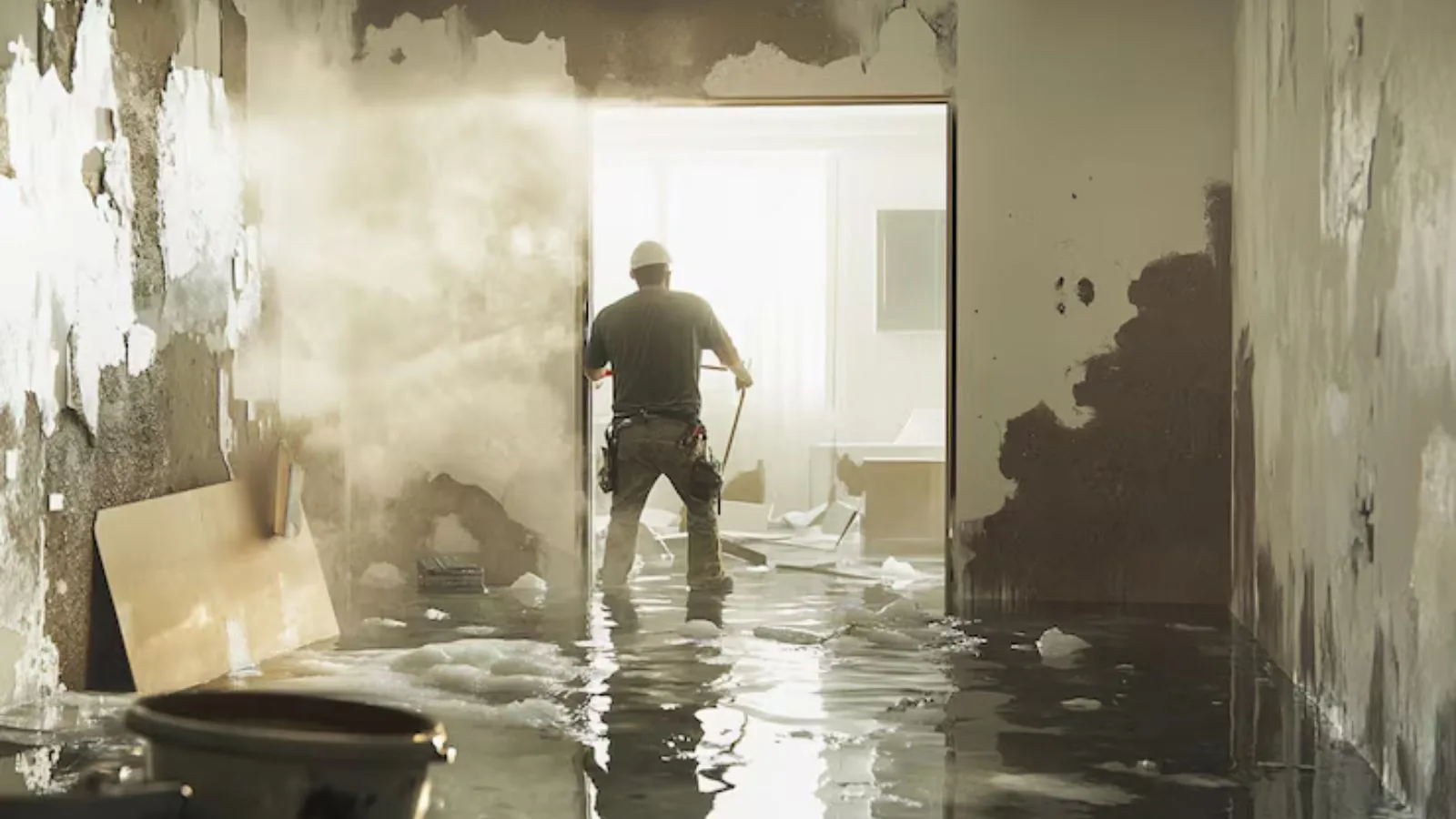
Flood water in a building is an emergency, and it is not clean water. Stay out of it, keep children and pets away, avoid electrical items, and call our 24/7 line in Deerfield, IL. If officials tell you to evacuate, follow them first.
Flood damage cleanup in Deerfield, IL starts with a hard truth: water that comes in from outside the building is not clean water. Creek overflow, storm runoff, and groundwater carry soil, bacteria, and chemicals into your home, and that changes what can be saved.
This is an emergency, and our line is open 24/7. While you wait, stay out of the water, keep children and pets away from it, and do not run vacuums or fans in standing water.
The pages on water extraction and storm water damage cover related situations. This page is about flooding itself, meaning water that rises from outside or comes up through the floor, and about the cleanup that follows.
When flooding is an emergency
Treat flood water as an emergency whenever it has entered a living space, a utility area, or a finished basement, or when it keeps rising. Call right away if:
- Water is above the level of electrical outlets or has reached the furnace, water heater, or panel.
- The water is dark, smells of sewage or fuel, or has debris in it.
- Floor drains are bubbling or the sump pit is full and not emptying.
- A neighbor or the Village reports flooding on your street.
If the panel is in a wet area, do not touch it. Call the electric utility or 911 for any electrical or gas risk before you call the restoration line.
Flooding around Deerfield
Deerfield sits near the Des Plaines River and branches of the North Branch of the Chicago River, and the village was affected by the April 2013 flooding along the West and Middle Forks of that river system. The Village reported that standing water and debris stayed on some roads for a time, and that homeowners with damaged carpet should bundle it for curbside pickup.
Flood maps are public. FEMA's Flood Map Service Center lets you enter your address and see whether a mapped flood hazard area touches it, and the Village engineering office at 847-317-2490 can answer questions about local drainage.
Your own lot may drain differently than the block next to it, so check your address instead of assuming. Being outside a mapped zone does not mean water cannot enter, and heavy rain can overwhelm a storm sewer anywhere.
How flood cleanup is done
- Safety checkThe crew confirms power and gas are safe, puts on protective gear, and identifies the waterline and the likely source.
- Bulk water removalPumps and extraction units remove standing water, working from the deepest spot out.
- Remove what cannot be savedCarpet, pad, insulation, and wet drywall that touched flood water are usually cut out and bagged. Porous materials hold contaminants that cleaning does not reach.
- Clean and treatHard surfaces and framing are cleaned and treated with antimicrobial products suited to the water category.
- Dry and verifyAir movers and dehumidifiers run until moisture meters show framing and subfloor back at normal levels. See structural drying for how that process works.
What can be saved and what cannot
| Material | After clean water | After flood water |
|---|---|---|
| --- | --- | --- |
| Carpet and pad | Often dried in place if caught early | Usually removed |
| Drywall | Cut and dried or replaced depending on wicking height | Usually removed and replaced |
| Hardwood flooring | Sometimes dried with special systems | Often removed if soaked from below |
| Concrete and framing | Cleaned and dried | Cleaned, treated, and dried |
| Upholstered furniture | Sometimes saved | Usually discarded |
Hidden problems after the water is gone
Flood water travels. It can wick up a wall past the line you can see, settle in a wall cavity, and sit under flooring that looks fine. A musty smell a week later usually means moisture was missed. Thermal imaging and moisture meters find those spots, and they are part of the assessment instead of an extra.
Mold is a real follow-on risk when wet materials stay in place for more than a day or two. If you already see growth, the mold remediation page explains testing and containment under the ANSI/IICRC S520 standard. We will not promise that mold will never appear, but a fast, thorough dry-out is the best prevention.
Scope, price, and insurance
Scope and price are explained before work starts. Flood cleanup costs depend on:
- Water category. Outdoor flood water is handled as contaminated, which adds protective gear and disposal.
- Depth and area. A flooded basement and a flooded ground floor are different sizes of job.
- Materials removed. Carpet, pad, drywall height, insulation, and trim all add up.
- Drying time. Dense materials and cool basements take longer to dry.
- Rebuild scope. Cleanup and drying come first, and repairs follow once readings are normal.
Homeowners policies generally exclude flood damage, and the Illinois Department of Insurance notes that flood insurance is a separate policy that typically takes effect 30 days after purchase. Sudden and accidental water from inside the home is treated differently, and sewer backup is sometimes covered only if you added that coverage. Call your insurer, ask how your policy treats this source of water, and keep photos and a list of damaged items.
Flood water in your Deerfield home? Call now and we will talk through safe first steps.
☎ (833) 521-1033Serving Deerfield and nearby towns
We dispatch to Deerfield and to Highwood, Lincolnshire, where the Des Plaines River runs through the village, and Lake Forest. If rain came in through the foundation and you are unsure whether it counts as flooding or seepage, the basement water damage page helps sort that out.
Yes. The line is open 24/7. Floods rarely wait for business hours, so the call is answered at night, on weekends, and on holidays, and we will talk you through safe steps first.
It can be. Outdoor flood water and sewer overflow can carry bacteria and chemicals. Wear boots and gloves if you must enter, avoid contact with skin and eyes, and keep children and pets out until the area is cleaned.
Standard homeowners policies generally exclude flood, and flood coverage is usually a separate policy. Ask your insurer how your policy treats the specific source of water, and document everything with photos.
FEMA's Flood Map Service Center lets you search by address. The Village of Deerfield engineering office can also answer local drainage questions. A mapped hazard area is not the only place water can enter a home.
Frequently asked questions
Do you handle flood emergencies at night or on weekends in Deerfield?
Is flood water in my house dangerous to touch?
Will my homeowners insurance pay for flood damage?
How do I know if my address is in a flood hazard area?
Is flood cleanup the same as basement waterproofing?
No. Cleanup removes water and damaged materials and dries the structure. Waterproofing changes how a building handles future water, and that is a different trade. We will say so plainly if that is what you need.
Flood water in Deerfield? Call (833) 521-1033, answered around the clock.
☎ (833) 521-1033