
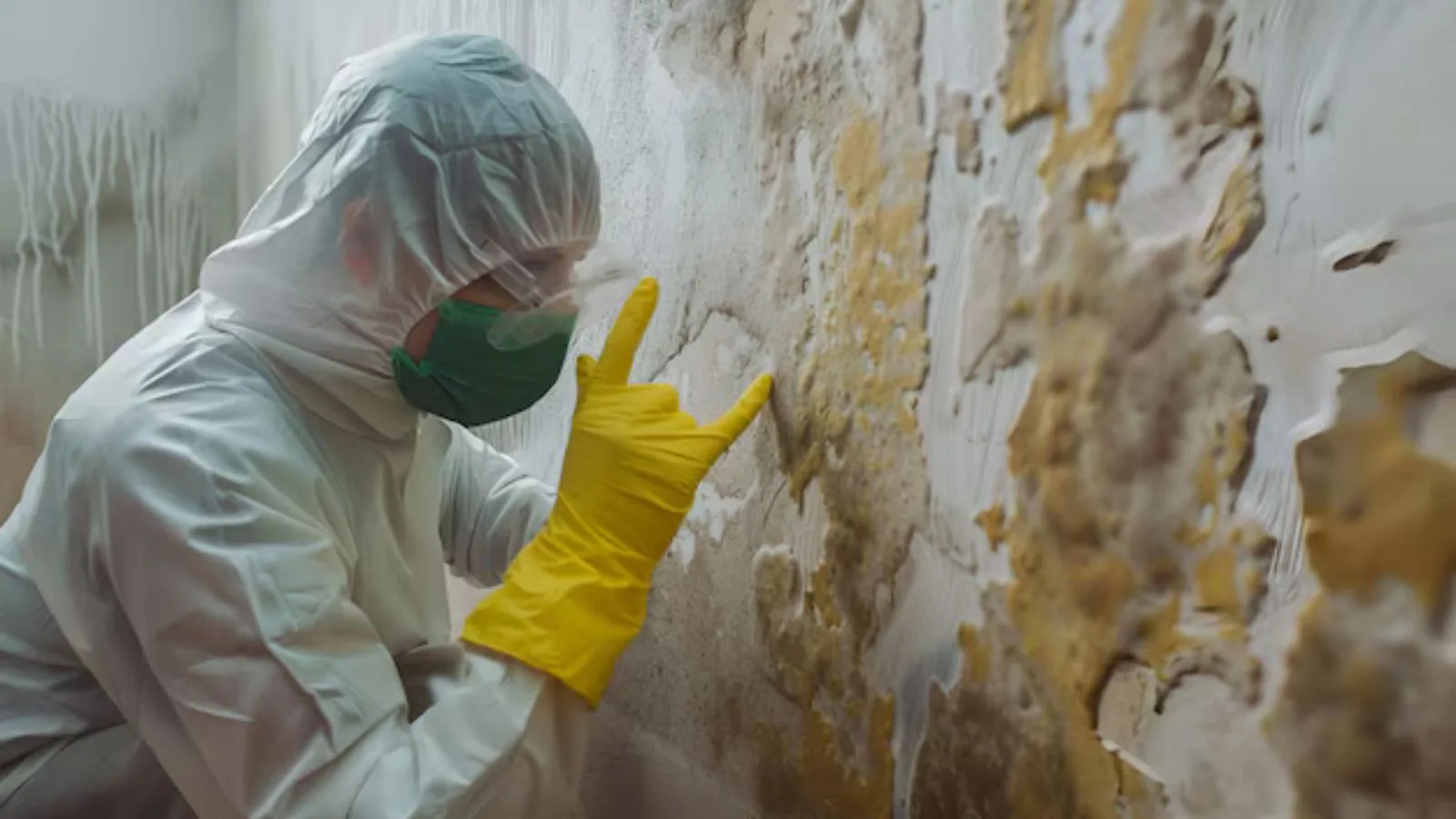
You scrubbed the wall, ran the dehumidifier, and a month later the dark spots are back. That is frustrating, and it is also a clue. Mold that returns is telling you something: moisture is still reaching that spot, or growth was never fully removed from the material. This guide walks through the usual reasons, how to check each, and what ends the cycle.
Reason one: the water source was never fixed
Cleaning is a cosmetic step. If water still seeps through a wall, drips from a pipe, or condenses on a cold surface, mold will regrow on whatever is there. The fix is to find the source.
Ask where the dark patch sits and what is on the other side. A wall below a hose bib, a corner below a window well, or a patch near a bathroom drain all point to different causes.
Reason two: the material was never dry
Water in building materials takes a long time to leave on its own. A wall can feel dry and still hold moisture in the cavity. If you dried a wet area with a household fan and left it, there may be moisture behind the paint. See structural drying, which explains why readings, not touch, decide when a material is dry.
Reason three: porous materials hold growth
Mold roots into drywall paper, wood, and fabric. Surface cleaning removes what is visible. Growth below the surface, or in the wall behind it, remains. Porous material with visible growth usually has to be removed, not cleaned. See wall and drywall damage.
Reason four: humidity
Even without a leak, a basement can stay humid in summer. Warm air carries moisture and meets cool walls and pipes, where it condenses. A basement that stays above a comfortable humidity for weeks gives mold what it needs. A dehumidifier helps, but only if it runs, drains, and is sized for the space.
Reason five: hidden leaks
A slow leak inside a wall or under a slab can feed mold for months. Signs include mold in the same location after cleaning, a water bill that rose with no explanation, and a smell that returns. See slab leak water damage for one such source.
Diagnose it yourself, step by step
- Mark the spotTake a photo and note the location, so you can compare in a month.
- Check the other sideLook at what is behind the wall, above it, and below it. Plumbing, window wells, and exterior grading are the usual suspects.
- Check after rainLook at the spot the day after heavy rain. If it is wetter, water is coming from outside.
- Check without rainIf it is damp in dry weather, think plumbing or condensation.
- Measure humidityA basic hygrometer shows whether the air is staying damp.
Common fixes, and who does them
| Cause | Fix | Who |
|---|---|---|
| --- | --- | --- |
| Grading or downspouts | Redirect water away from the foundation | Landscaper or contractor |
| Window well | Clear, repair, or cover | Contractor |
| Plumbing leak | Repair the pipe or fitting | Plumber |
| Sump pump failure | Repair or replace, consider battery backup | Plumber |
| Condensation | Dehumidify, insulate cold pipes | Homeowner or contractor |
| Existing growth in porous material | Remove and treat | Remediation crew |
What happens after the source is fixed
Once the moisture is stopped, the growth has to be addressed. A crew assesses the area, contains it, removes porous material, cleans, dries, and verifies. See mold remediation for the steps. A reputable company will ask about the moisture source before it talks about cleaning.
Be careful with quick fixes
Sealers and special paints are sold as mold solutions. Painting over active growth hides it and can trap moisture. A coating has a role after the space is dry and clean, not in place of the work.
Insurance
If mold returned because the leak was never fixed, coverage can be harder to claim. Many policies limit mold from long-term moisture. Keep the plumber's records and photos of each recurrence, and ask your insurer what applies.
Where we work
We serve Deerfield and nearby towns, including Fort Sheridan and Lake Forest.
Reading Deerfield's wet seasons
The April 2013 flooding along the Chicago River's North Branch forks, reported by the Village of Deerfield, is a reminder that spring can bring more groundwater than a basement was ever tested against. If mold in your basement tends to return in spring or after storms, that pattern points to outdoor water, not plumbing.
Keep a simple log of dates when the mold reappears and compare it with rain. That log is useful to a drainage contractor and to the Village's Engineering Division at 847-317-2490 when you ask about conditions near your address.
Safety checklist before you scrub
- Wear a particle respirator, gloves, and eye protection.
- Keep children and pets out of the basement.
- Do not mix cleaning products.
- Turn off power to any wet outlet.
Professional mold work follows ANSI/IICRC S520.
Cleaned it twice and it is back? Call and tell us what you found.
☎ (833) 521-1033The moisture source is usually still there, or growth remains inside a porous material.
It helps with humidity but does not fix a leak or seepage. It must run continuously and drain properly.
Mold can bother people with allergies or asthma. For health questions, talk to a physician.
Frequently asked questions
Why does mold come back after I clean it in my Deerfield basement?
Will a dehumidifier stop it?
Is recurring mold dangerous?
Should I replace the drywall?
If mold is growing on or in the drywall, the board is usually removed. A crew can assess it.
Recurring basement mold in Deerfield? Call (833) 521-1033, answered 24/7.
☎ (833) 521-1033