
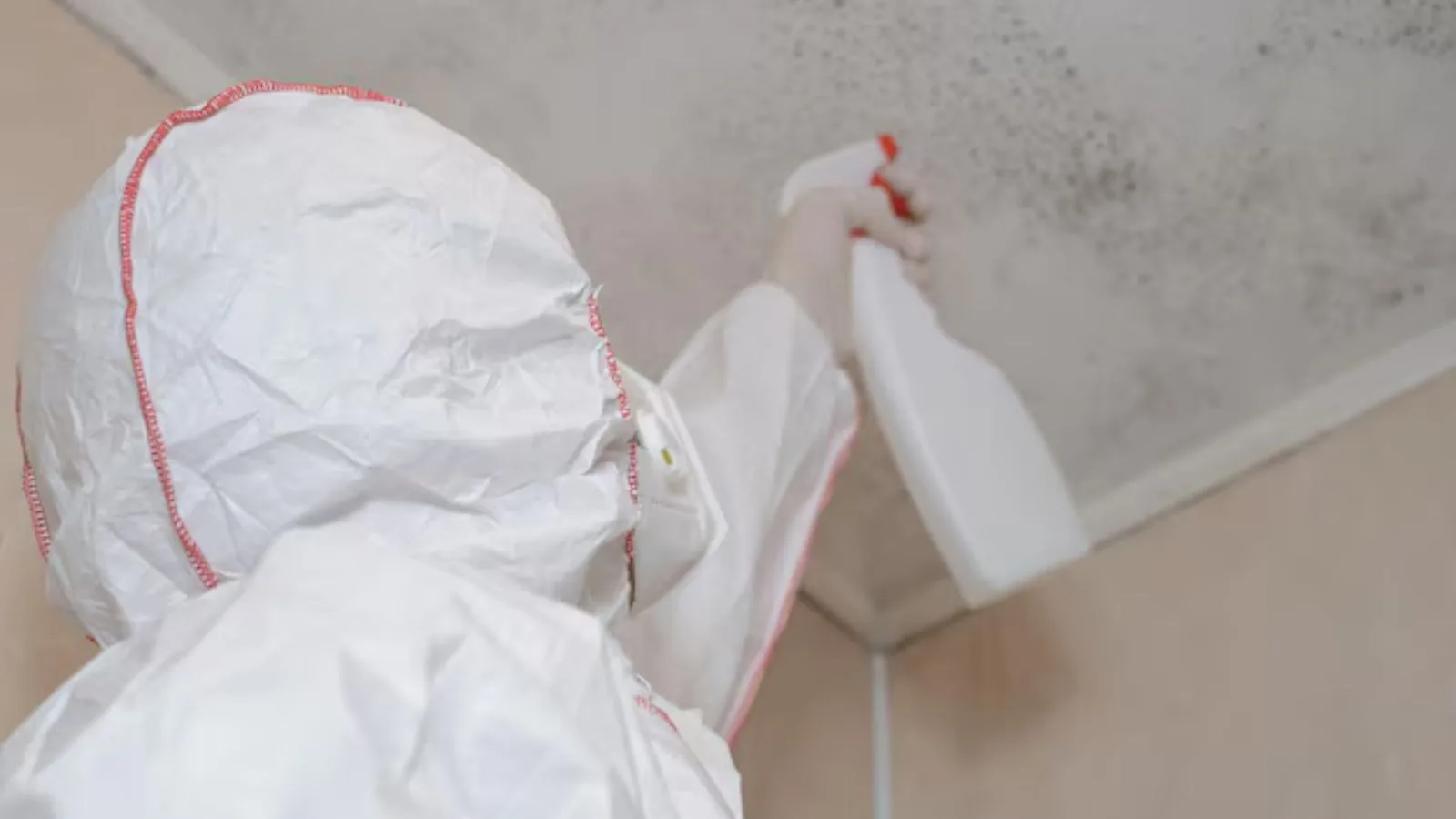
Basements are where mold shows up first because they are cool, dark, and close to the ground. A dehumidifier that fills up every day, a smell that greets you at the bottom of the stairs, or a dark patch along the base of a wall are all common signs.
Getting rid of basement mold takes two steps in the right order: find and fix the moisture, then remove the growth. Skip the first, and the second does not last.
Step one: figure out where the moisture comes from
Basement moisture comes from a short list of places.
| Source | Clue |
|---|---|
| --- | --- |
| Groundwater through walls or floor | Dampness after heavy rain, white mineral deposits on masonry |
| Window wells and grading | Water stains below windows, wet corners |
| Plumbing leak | Wet spot near a pipe, drain, or water heater |
| Condensation | Cold pipes sweating, damp air in summer |
| Failed sump pump | Water in the pit that does not leave |
| Sewer backup | Floor drain overflow, strong sewage smell |
Each needs a different fix, and many are a plumber's or drainage contractor's job, not ours. Our basement water damage page covers the cleanup side when water has come in.
Step two: decide what can be cleaned and what must go
Hard, non-porous surfaces like sealed concrete, metal, and glass can usually be cleaned. Porous materials are different.
Drywall
Mold grows in the paper face and the gypsum. Visible growth usually means the board is cut out.
Carpet and pad
Growth on the backing or pad generally means removal.
Wood framing
Surface growth can be cleaned, and deeply stained or soft wood needs a closer look.
Insulation
Wet or moldy insulation is removed.
Cardboard and fabric
Stored items with growth are usually discarded.
What a homeowner can do for a small patch
If the growth is small and on a hard surface, you can clean it with detergent and water, wearing gloves, eye protection, and a respirator rated for particles. Dry the area completely. Do not mix cleaning products, and keep the space ventilated. If it returns within days, the moisture is still there.
What needs a professional
- Growth over a large area or on drywall or insulation.
- Mold after a flood or sewage backup.
- A musty smell with no visible source, which may mean it is inside a wall.
- Anyone in the home with a lung condition or allergies, who should talk to a physician.
The professional process, following ANSI/IICRC S520, includes assessment, containment with plastic barriers and filtered air, removal of affected materials, cleaning, drying, and verification. See mold remediation.
Dry the space completely
Drying matters as much as removal. A basement needs equipment that pulls moisture from the air and the materials, and readings to confirm it worked. See structural drying. A dehumidifier in the corner is not a substitute after a real water event.
Keeping mold from returning
- Fix leaks promptly and keep the plumber's records.
- Keep gutters clear and downspouts directed away from the foundation.
- Check grading near the house so that water slopes away.
- Keep window wells clear.
- Test the sump pump before heavy rain, and consider a battery backup.
- Keep stored items off the floor and away from walls.
- Watch humidity in summer, and run a dehumidifier when needed.
Finished basements need extra care
Carpet, drywall, and paneling in a finished basement hold moisture against framing. If a leak has soaked a finished wall, opening it is often the only way to know. See wall and drywall water damage. Hidden growth behind paneling can be larger than the stain suggests.
Insurance
Whether insurance covers basement mold depends on the water source and the policy. Groundwater and sewer backup are often excluded unless you have added coverage. Ask your insurer, and take photographs before cleanup.
A word on dehumidifiers
A household dehumidifier helps with everyday humidity in a basement, and it should be emptied or plumbed to a drain so it keeps running. Set it where air can reach it, keep doors to the room closed while it works, and clean the filter on the schedule in its manual. It is not designed to dry a wall that has been soaked, which is where professional equipment and readings come in.
Nearby homes
We serve Deerfield and nearby towns, including Highwood and Lincolnshire.
Deerfield drainage and where to ask
Deerfield sits partly in Lake County and partly in Cook County, and the Village's Engineering Division, at 847-317-2490, can answer questions about public drainage and stormwater near your address. In April 2013 the Village reported flooding along the West and Middle Forks of the North Branch of the Chicago River, a reminder that groundwater and outdoor water are a real risk for lower levels in this area.
If your basement is wet after heavy rain, a call to the Village can tell you whether neighbors are seeing the same thing, which helps decide whether the fix is on your property or beyond it.
Safety checklist before you clean
- Wear a particle respirator, gloves, and eye protection.
- Ventilate, and keep the room closed off from the rest of the house.
- Do not mix cleaning products.
- Stop if growth is larger than a small patch, and call.
Basement mold in your Deerfield home? Call and describe what you see.
☎ (833) 521-1033Not reliably. Bleach does not address moisture and can leave growth behind in porous materials.
Moisture is present, from groundwater, grading, or a window well. A musty smell means it is worth investigating.
It depends on the scope. For larger jobs, the crew explains containment and what to expect.
Frequently asked questions
Can I get rid of basement mold with bleach?
Why does my Deerfield basement smell musty after rain?
Do I have to leave the house during remediation?
Who handles public drainage questions?
Deerfield's Engineering Division at 847-317-2490 and Public Works at 847-317-7245.
Basement mold in Deerfield? Call (833) 521-1033, answered 24/7.
☎ (833) 521-1033