
People use the words mold and mildew almost interchangeably, and in everyday talk that is fine. For a homeowner deciding what to do about a gray patch in the shower or a dark streak on a basement wall, the difference is useful.
This guide explains how the two are commonly told apart, what each one suggests about moisture in the house, and which situations need more than a sponge. For health questions, ask a physician. We do not diagnose.
The short version
Mildew is a term usually applied to surface growth, often flat, powdery, or downy, and often white, gray, or yellowish. It tends to sit on a surface and wipe off. Mold is the broader word, and it covers growth that can be fuzzy, slimy, or spotted in black, green, blue, or other colors, and that can grow into porous materials. Both need moisture. Both are a sign that a space stays damp.
| Feature | Mildew (common usage) | Mold (common usage) |
|---|---|---|
| --- | --- | --- |
| Look | Flat, powdery, gray or white | Fuzzy or spotted, many colors |
| Where | Surfaces like tile, grout, shower walls, window sills | Porous materials like drywall, wood, carpet, insulation |
| Cleaning | Often wipes off a hard surface | May be rooted in the material |
| What it signals | Damp conditions or poor ventilation | Longer or heavier moisture |
You cannot reliably tell species by eye, and color alone does not tell you whether something is harmful. A lab can identify species, but for a home, the useful question is how much, where, and why.
Where each tends to show up
Mildew often appears in bathrooms, on shower curtains, around window frames with condensation, and on leather or fabric in humid rooms. Mold is more likely in places that stayed wet: behind a wall after a leak, under a sink, in a basement after seepage, or on carpet pad after a spill.
How to clean mildew on a hard surface
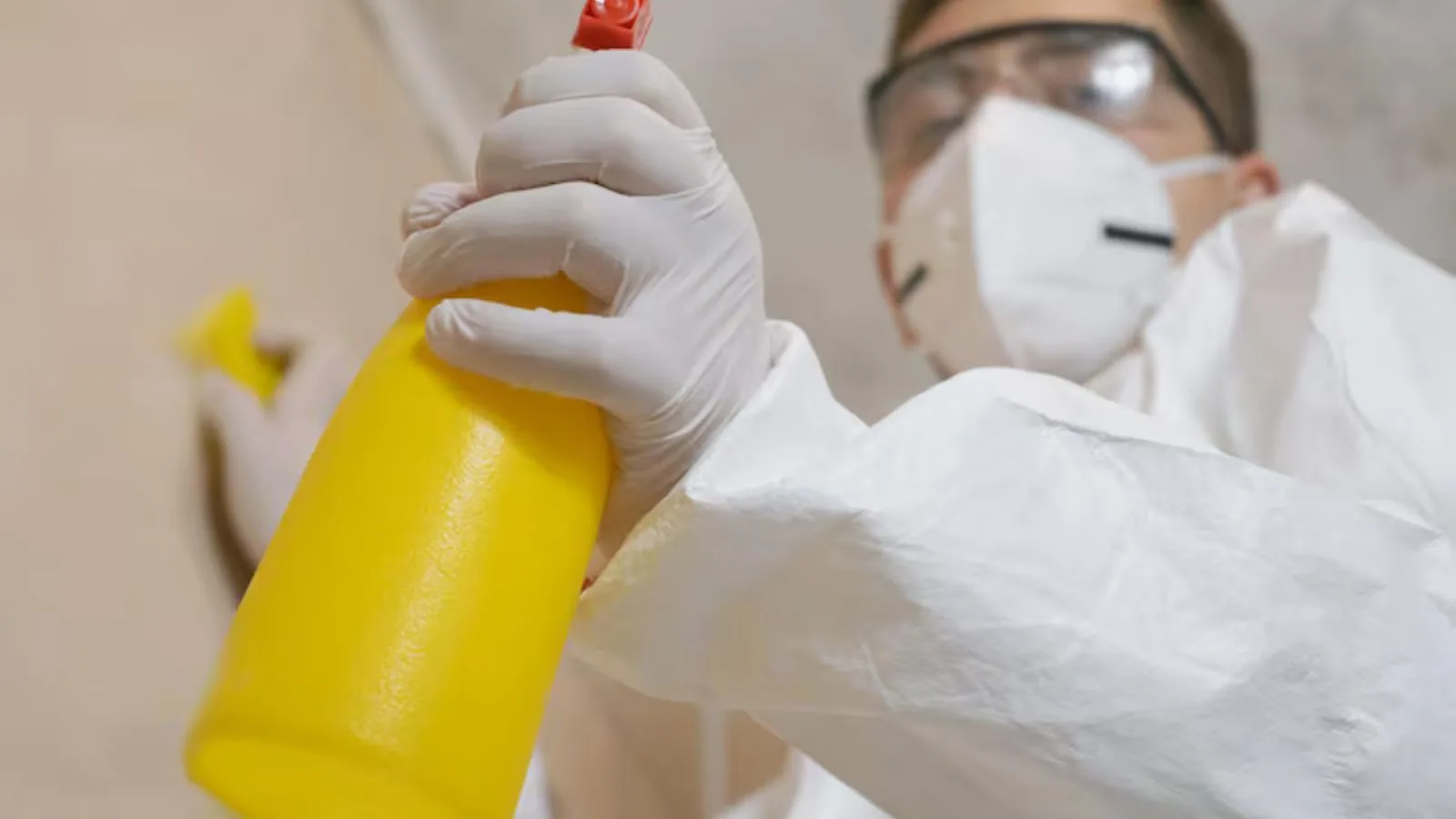
- Wear protectionGloves, eye protection, and a respirator rated for particles protect you while you work.
- VentilateOpen a window or run an exhaust fan, and keep the room closed off from the rest of the house if you can.
- CleanDetergent and water on a hard surface usually removes surface growth. Do not mix cleaning products.
- DryDry the area thoroughly, since the growth returns when moisture does.
- Fix the causeImprove ventilation, repair leaks, and reduce humidity.
When it is more than mildew
Call for an assessment when:
- Growth covers a large area, or is on drywall, carpet, wood, or insulation.
- It returns after cleaning.
- A musty smell is present with no visible source.
- It followed a leak, a flood, or a sewage backup.
- Someone in the home has asthma, allergies, or another health concern. Ask a physician about it.
See mold remediation for the steps the professional process follows, including ANSI/IICRC S520.
Moisture is the common thread
Whether you call it mold or mildew, the cure is dry conditions. That means fixing leaks, venting bathrooms, keeping gutters clear, and drying water damage quickly. After a leak, see structural drying for how materials are dried and verified. Surface cleaning without a dry space is a short fix.
Bathroom mildew versus a hidden leak
Mildew in a bathroom is common and often a ventilation issue. But if it keeps returning at the same spot, check for a leak behind the tile or around the tub. A soft wall, a loose tile, or a stain on the ceiling below the bathroom suggests water is escaping. See ceiling water damage and wall and drywall damage.
Basements and crawl spaces
In below-grade spaces, what looks like mildew on a concrete wall may be efflorescence, which is a white mineral deposit left when water moves through masonry. It is not mold, but it means water is passing through. Scrape a bit and check, and look at the moisture source. See basement water damage and crawl space damage.
What testing can and cannot tell you
Testing can identify what is present at the time of sampling. It cannot tell you how a particular person will react, and results can vary widely by method. Visible growth plus a moisture source is often enough reason to act. If you want independent testing, hire a separate testing professional.
Insurance
Mold coverage varies by policy and by cause. Photograph the growth before cleanup and ask your insurer what applies.
Nearby towns
We work in Deerfield and nearby towns, including Highwood and Lincolnshire.
Old buildings, old materials
Deerfield's Historic Village preserves buildings from the 1800s, including the Caspar Ott House (1837), Cadwell's Corners (1835), and the Wilmot School (1847). Older structures show how long wood, plaster, and early construction can last when they are kept dry, and how much they depend on it.
If your own Deerfield home has original plaster, wood trim, or an unfinished basement, remember that older materials often hold moisture longer than modern ones. A dark mark in an older house deserves a moisture reading, not only a scrub.
Not sure if it is mold? Call and describe what you see.
☎ (833) 521-1033In everyday use, mildew refers to surface growth and mold to the broader group. Both mean moisture is present.
Usually, yes, on hard surfaces. If it returns or spreads to drywall or ceilings, check for a leak.
No. You cannot judge by color. For health questions, ask a physician.
Frequently asked questions
Is mildew the same as mold?
Can I clean mildew in my Deerfield bathroom myself?
Does color tell me if it is dangerous?
What if I see white deposits on my basement wall?
It may be efflorescence, a mineral deposit left by water moving through masonry. It means water is present.
Questions about mold or mildew in Deerfield? Call (833) 521-1033, answered 24/7.
☎ (833) 521-1033